Aerosol Intelligence Lab
描述
描述
描述
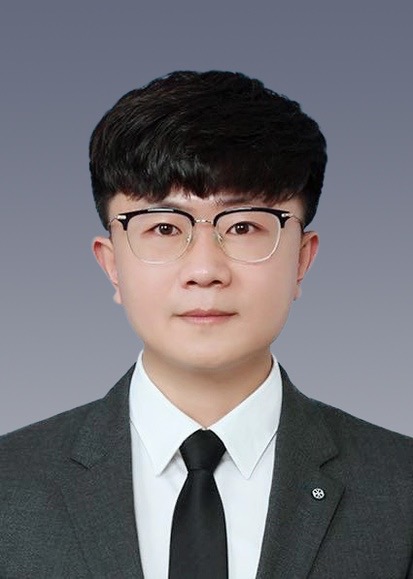
Jicheng Feng
Group Leader, Principle Investigator
National High-Level Talent Program
Shanghai Municipality: Program for High-Level Overseas Talents Introduction 
Dr. Jicheng Feng obtained his PhD from Delft University of Technology in 2016. He then worked as a postdoctoral researcher at Leiden University for about 2 years. In 2018, he joined Seoul National University as research assistant professor. Since September 2020, he has worked as a tenure-track Assistant Professor (PI) at ShanghaiTech University, where he leads the Aerosol Intelligence Laboratory (AIL). 
描述
Binyan Liu
Postdoc researcher
Nanophotonics
Our main focus lies on the metamaterials. Micro/nano optics pushes the development of nanostructured materials that respond to light of short wavelengths. Such development has reached the limit with respect to the material types and their manufacturing. To overcome these problems, our group develops a new nanomanufacturing technology, which can be adapted to show the ability of materialization and structuring. With that, we are busy to understand the light-matter interaction, exploring the resulting new phenomena. This study can lead to an opportunity of breaking through the diffraction limit. 
描述
Our research mainly focuses on the creation and understanding of the behaviors of atomic clusters, also named as superatoms. For nanoparticles below a critical size (∼100 nm), their properties are not sensitive to the addition or removal of a single atom. As for atomic clusters, their properties change abruptly and nonpredictively, a stage in which even the addition of a single atom or electron may cause a drastic change. In this regime, the electron wavelength becomes comparable to the cluster size. The fact that properties of matter at this length scale are fundamentally different from their bulk behavior can be effectively used to produce materials with tailored properties. Such cluster-assembled materials, with their unique properties, can expand the scope of materials science.
Yaochen Han
描述
PhD student
Atomic clusters
Shirong Liu
PhD student
Faraday 3D printing
描述
The semiconductor industry is facing a new era in which device downscaling and cost reduction are becoming technologically impossible tasks. Nanotechnology scientists and semiconductor companies are now looking for solutions to bridge the related gaps and improve cost performance. Our group focuses on the development of a new aerosol-based 3D nanoprinting technique that enables the controlling of the topologies of electric fields at nano-scale, and the resulting nano-path guides the charged nanoparticles to a precise location in each dimension. Our main aim is to realize its automation and then to make a smart integration into semiconductor sectors, which will benefit to the many fields, such as nanophotonics and nanoelectronics.
Post-Moore era confronts key challenges of 3D integration in ICs. This project proposes a novel paradigm for fabricating vertical transistors based on our self-developed Faraday 3D printing. This approach offers a promising route for gaining the complete freedom of spatial control at atomic-level, while maintaining the high-aspect-ratio and multimaterials. It provides an alternative strategy for developing monolithic 3D circuits with multimaterial selection and simplified processes, yielding an original technology to the field of high-end chip manufacturing.
Yaotao Shan
描述
PhD student
Printed nanoelectronics-type Ⅱ
We are devoted to develop the new generation of nanoelectronics. Such an interdisciplinary research relies on our Faraday 3D printing technique, particularly its strong abilit in printing 3D metal nanostructures with a typical feature size of sub-100-nm and in unlimited choices for materials.  We expect that our research will open uncharted area in 3D-printed nanoelectronics. 
Yuxiang Yin
描述
PhD student
Printed nanoelectronics -typeⅠ       
Rui Cao
描述
MEng student (SMDL)
Nanofabrication
Faraday 3D printing is a new paradigm for nanomanufacturing. We have realized the use of electrically biased planes for configuring the electric fields. By manipulating the potentials appllied to each plane, we can control the width of the "tip" field. Our project aims to fabricating the holey plane with nanosized holes and pitches, so that the printed features can be accordingly miniaturized to atomic range in 3D. The underlying physics for this is guided by the conservation of field lines. 
Qiling Liu
描述
PhD student 
Optical metamaterials
Surface plasmon is a collective oscillation phenomenon generated by the interaction between free electrons on the metal surface and the incident light field. This topic focuses on micro-nano optics and uses Faraday 3D printing technology to study the relationship between surface plasmon phenomena, material geometries and size, as well as the behavior of electron gas in printed nanoarchitectures, and explore the possibilities for new metamaterials.
Ji Wen
描述
MSc student 
In situ charge measurement
Using the Faraday 3D printing technology, we can print 3D nanostructures, which are key components in IC fabrication. This research mainly aims at regulating the conductivity of the printed nanostructures. We also would like to explore the scenarios where Faraday 3D printing technology can bring improvement and transformation in liquid process. This liquid process may bring unprecedented possiblities for biomaterials-related applications.
Jiehao Kou
描述
PhD student 
Reactive dynamics for flying atomic clusters
Here we focus on a deep learning molecular dynamics algorithm (DM) to calculate the collisional cross sections of atomic clusters. Based on this algorithm, the electrical, thermodynamic, and magnetic properties can be predicted. These properties are then harnessed to design next generation materials, including catalysts et c. We also investigate the reactive dyanmics of clusters with our self-developped online monitory system.  
Qingyan Wang
描述
MSc student 
Low-pressure 3D nanoprinting
This study aims to futher miniaturize the printed features while maintaining their material properties without any post-treatment. The key strategy involves the use of atomic clusters as the building blocks and this aim is achieved by mimicking those of film technologies via tuning down pressure. This operation increases the mean free path of carrier gas and decreases the frequency of collisions, thereby inhibiting coagulation for prolonging the lifetime of atomic clusters in teh gas phase and ensuring that such clusters can be precisely arranged to 3D nanoarchitectures.
Shihao Liu
描述
MSc student 
Large-area 3D nanoprinting
This project is to realize the 3D nanoprinting over a virtually infinitely large area by integrating a mobilized system. This invetion enables complete programmability and full automation of the printing process. This project addresses three major challenges encountered in nanofabrication: large-area uniformity, precise control of three-dimensional architectures, and in-situ integration of multiple materials. This research aims to develop a stable and precise cutting-edge manufacturing equipment, providing reliable means for frontier innovations in fields such as metamaterials and micro-nano optoelectronics.
Yizhou Liu
描述
MSc student 
Gap plasmonics
Gap plasmonics refer to a highly localized and significantly enhanced electromagnetic mode. Metal nanostructures create nanoscale tiny gaps, where the collective oscillation of surface free electrons couples with external electromagnetic fields. As an important branch of plasmonics, this research utilizes Faraday 3D printing technology to investigate the regulation mechanisms and functional applications of gap plasmonics. The aim is to break through the bottleneck of nanofabrication techniques in the precise construction of nanogap structures and provides a novel platform for the development of high-performance plasmonic devices
Zhengkun Li
描述
MEng student (SMDL) 
Faraday lithography
As an emerging technology in nanomanufacturing, Faraday 3D Printing enables the fabrication of multi-material, high-precision, large-area 3D nanostructures, laying a new foundation for upgrading the ability of current nanofabrication. This project aims to systematically explore the core application scenarios and process adaptation paths of this technology in IC manufacturing, focusing on its integration into existing  nanofabrication processes, so as to realize the complete patterning scheme of "3D-printed nanostructures — integration into existing nanofabrication — pattern transfer".
Wei Zhang
描述
MEng student (SMDL)
Grayscale lithography
This project targets micro–nano manufacturing and investigates the mechanisms by which patterned dielectric layers defined by grayscale photolithography regulate the topologies of electric fields in Faraday 3D printing. By engineering aperture morphology and dose gradients, we systematically elucidate the quantitative relationships between dielectric-layer pattern and structural formation, and establish a programmable mapping among feature size, geometric configuration, and material architectures. This enables fine-grained programming of field topologies and material structuring, advancing toward atomic-level three-dimensional deterministic construction of structural arrays.
Tianyu Jiao
描述
BSc student
Field topologies
Electric fields can compete to form their borders, eventually forming desirable field landscapes. For obtainning such refined field topologies, each field has to be well established. This project aims to achieve complete control of Faraday 3D printing by overcoming the challenge of managing the unpredictable local electric fields, which are generated by deposited ions, in contrast to the easily controlled global field and those relying on electrically biased planes for configuring the field topologies. 
Muda Chu
描述
BSc student
VSRR
A vertical standing split ring resonator (VSRR) is a type of metamaterial structure where the split ring is oriented vertically, often on a substrate, with its electromagnetic fields more localized in the gap, leading to enhanced sensitivity for applications like sensors and metamaterial absorbers. Unlike traditional planar designs, the VSRR is "lifted" off the substrate, reducing loss and increasing sensing volume. This design is used in high-performance sensors and perfect absorbers in various frequency ranges, including terahertz and infrared. 
描述
Could the next be you?